Wednesday, August 25, 2010

Teaser Video

Poster and Synopsis

Poster


Synopsis

Crop circle is one of the most unexplainable events that occurred in many countries around the world. A crop circle is a sizable pattern created by the flattening of a crop. It is an organized harmonic forms that manifest around the world, the result of an energy interacting with the physical world - in this case plants. This energy is comprised of light, sound and magnetism. To date, crop circles have been reported in 29 countries, and have appeared in mediums such as wheat, barley, canola, trees, ice, rice paddies, even linseed. Some says that crop circle is a hidden message sent from the unknown entity from other dimension. Some also conclude that crop circle is just another hidden agenda created by an unknown organizations for their own benefits. Albeit the numerous facts and myths stated about the crop circle, it is still a big question for people who really want to know the truth.

Crop circles are not a modern phenomenon, over 200 cases have been reported prior to 1970. Some eyewitnesses claims that crop circles forming in under twenty seconds; these witnesses describe sightings of “incandescent or brightly-coloured balls of light which either precede a crop circle or are actively involved in its creation; in some cases shafts of light have descended onto a field and swirled the crop into a geometricshape in less than fifteen seconds.” Such reports are often described by farmers and local residents.

The early designs in 1980 appeared primarily as simple circles, circles with rings, and variations on the Celtic cross. By the late 1980s they had developed straight lines, creating pictograms not unlike the petroglyphs found at sacred sites thoughout the world. After 1990 the designs developed exponentially in complexity, and today it is not unusual to come across crop glyphs mimicking computer fractals and elements expressing fourth dimensional processes in quantum physics.

This interactive and infographic installation will uncover some of the mysteries of crop circles by using an electronic LED’s as a new medium to form the symbols. The symbols that will be present are selected from the most complex and meaningful as decoded by the researchers. Although there will be numerous questions about the genuine interpretations of the symbols, this installation will give users some new ideas and info to think about. The user will start the installation by walking around the LED board, there will be several sensors on each corner to trigger the patterns, plus there will be a monitor showing about the origins, history, actual patterns and information on each of the symbols.


Wednesday, August 18, 2010

Contextual

Mr Kok Yoong ask us to define the actual context about our project. In my understanding, my project is about an unknown symbols from the crop circles that has been related with supernatural things and conspiracy theory. I tend to create a new kind of "Crop Circle" based on interactive installation using an electronic LED's (Dot Matrix) on a board.

From what I understand, my project covers 4 context as advice by Mr Kok Yoong.

-Historical Context
-Social Context
-Political Context
-Institutional Context

Historical Context

1. UFO incident near Roswell, New Mexico that started the extraterrestrial phenomenon in June or July 1947

2. People started to pay attention about the unidentified flying object and related them to the military aircraft

Social Context

1. After the famous Roswell incident, many science fiction movies / tv series started to take place in entertainment industries (The X-Files, Star Wars, Star Trek, ET, Independence Day)

2. New Pop Culture / trend about extraterrestrial and alien and people started to make money of it's popularity (Alien Workshop)

3. The discovery of Crop Circle became a new form of art for the designers and artists.

Political Context

1. Some believe that the government wants to divert people's attention about the global or local problems such as war crisis in the middle east, economy crisis, education crisis and the political crisis in the United States.

2. Some also believe that the government tend to generate fear among their citizens about the possibilities of war against the aliens from outer space.

3. Many weapons of mass destruction were produce as a national security excuse

4. Big countries fought each other for blaming that the UFO is actually a spy plane for spying an enemy, this create more excuses for more war.

Institutional Context

1. More people back to religious institutions because they are afraid of the unidentified extraterrestrial threats.

Flowchart

Budget

Content Development

In my previous technical specifications, I chose to use six motion sensors to trigger the patterns, but I think the cost is too high, instead, I decided to use webcam as a movement sensor on the top of the Dot Matrix Board.

Artist Impression


Six Different Symbols

This is the patterns that I will use in my installations.


Monday, August 2, 2010

Technical Specs

Last weekend, I went to Jalan Pasar to gather some information about technical specification about my project, I went to Nixie Electronic store and asked the technician there about the possibility of making a single board of 576 light bulb and make them light up in different patterns and sensors.

The technician said it is nearly impossible to build the device because of it's budget and time problem.

So he suggest to use Dot Matrix instead of light bulbs. But the overall size of my project will be less than the original.

Dot Matrix


This is the illustrated picture of a single Dot Matrix


and this is the whole size of my project that should be (top view)


this is the picture of a motion sensor that I will use to trigger the patterns (still considering)


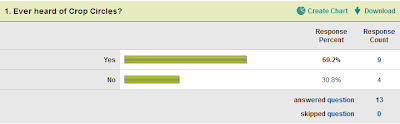
Survey


Monday, July 19, 2010

Project Sketches / Ideation (CANCEL)

Overall view


Pattern 1


Pattern 2


Pattern 3

Thursday, July 15, 2010

Crop Circle Patterns


Precedence Studies

Deep Screen by Muti Randolph

For his installation Deep Screen at our New York event today, creator Muti Randolph installed 6,144 motion sensitive light bulbs that will change color and sounds based on their interactions with the participants that walk through them. He stopped for a moment to talk to us about the thought process and technology behind his illuminated interactive environments.

Command Line Wave Ver. 2 by Daito Manabe and Motoi Ishibashi

'Command Line Wave' is a work combining live performances and installations that use light cubes with built-in handheld microphones and sounds for controlling the patterns of the light. What you hear from a fax or a modem when they are connecting is the information transformed into sound under a certain rule and it somehow sounds cool. I came up with an idea of making sound for my live performances by generating sound under a certain rule. (Not a musical rule, but a rule that derives from a technical reason for communication.) The plan of commands to control the patterns of light on the cube becomes the rule and the sequences of those commands generated under the rule becomes music. Also, the connection of the cube has an uncertainty depending on the position and angle at which it would be placed. This is not a simple interactivity on a one-on-one level, but a work that generates not only micro rules but also macro and spatial rules by selecting commands according to the information received previously such as by how many percent the object is unreactive. The cube not only glows in response to sound , but also blinks and glows in a curve sometimes, regardless of the sound. How the cube glows can be controlled by sending sound commands. For example, in one scene, the cube blinks regardless of the sound, in the next scene, the cube reacts to low pitch sound and glows red. After that, the cube reacts to low pitch sound by glowing blue, middle pitch sound by glowing green, and high pitch sound by glowing red. Creating the cube object and designing the plan of commands is merely making a platform. There are many possibilities for which this can be presented. If one wants to enjoy such a media work using those commands and exchanging data, usually one needs a computer or a special interface device. However this work only requires speakers、and one can enjoy the results to the full extent. For example, you can input commands to an audio CD and the cube would respond fully to the sound. This work can be played using existing infrastructures.


Concept: Daito Manabe + Motoi Ishibashi

Sound Programming: Daito Manabe

Device Programming: Motoi Ishibashi

Cube design: Toshiaki Yanagisawa


Wednesday, July 14, 2010

Critical Commentaries : Crop Circle

Crop circles uses symbols as medium to sent a message, The complexity of the crop circle attract many people around the world to analyze and interpret whats the meaning behind it. Some people are attracted by the beauty of the crop circles and they want to create their own. But many are paranoid about where it come from and they create a lot of stories. Some stories are very strange by relating the crop circles as a message from aliens and some says that it's a propaganda by the government.


I personally didn't believe that crop circles are made by aliens. I believe that theres some community / secret society / government made all this to distract us from being focus into things that really matters, like war in Palestine. They want us to live in fear and when we are searching for the right solution, they themselves can finally give us the "protection" because we don't have another options.

This is a story about two guys who started the trend.

"In 1991, two men from Southampton, England, announced that they had conceived the idea as a prank at a pub near Winchester, Hampshire. Inspired by the 1966 Tully Saucer Nests, Doug Bower and Dave Chorley made their crop circles using planks, rope, hats and wire as their only tools: using a four-foot-long plank attached to a rope, they easily created circles eight feet in diameter. The two men were able to make a 40-foot (12 m) circle in 15 minutes.
The pair became frustrated when their work did not receive significant publicity, so in 1981, they created a circle in Matterley Bowl, a natural amphitheatre just outside Winchester, Hampshire—an area surrounded by roads from which a clear view of the field is available to drivers passing by. Their designs were at first simple circles. When newspapers claimed that the circles could easily be explained by natural phenomena, Bower and Chorley made more complex patterns. A simple wire with a loop, hanging down from a cap—the loop positioned over one eye—could be used to focus on a landmark to aid in the creation of straight lines. Later designs of crop circles became increasingly complicated.

Bower's wife had become suspicious of him, noticing high mileage in their car. Eventually, fearing that his wife suspected him of adultery, Bower confessed to her, and subsequently, he and Chorley informed a British national newspaper. Chorley died in 1996, and Doug Bower has made crop circles as recently as 2004. Bower has said that, had it not been for his wife's suspicions, he would have taken the secret to his deathbed, never revealing that it was a hoax."

Health Icon


This is a World Health logo, they used a picture of snake circling the stick. Can snake be relate to health?

This is the original one,

asclepiuswand-4.jpg (7762 bytes)

The asclepius wand, or asclepius rod is is an ancient Greek symbol associated with astrology and with healing the sick through medicine. The rod of Asclepius symbolizes the healing arts by combining the serpent, which in shedding its skin is a symbol of rebirth and fertility, with the staff, a symbol of authority befitting the god of Medicine. The snake wrapped around the staff is widely claimed to be a species of rat snake, Elaphe longissima, also known as the Aesculapian or Asclepian snake. It is native to southeastern Europe, Asia Minor, and some central European spa regions, apparently brought there by Romans for their healing properties.

Monday, July 12, 2010

Data Visualization : Total Ancient Symbols

Egyptian Symbols

Ankh


Symbol of eternal life. The gods are often seen holding an ankh to someone's lips this is considered to be an offering of "The Breath of Life". The breath you will need in the afterlife.

Amenta


This symbol represents the Underworld or Land of the Dead. Originally it meant the horizon of the sun set. Later, it became the symbol of the west bank of the Nile, where the sun set and also where the Egyptians traditionally buried their dead.

Ba


The Ba is what we might call someones personality. It would leave the body at the time of death. During the days the Ba would make itself useful, at night it would return to the tomb. At this time, it would look for the person to which it belonged. This would be the mummy, however, often the egyptians would supply the Ba with a statue in the likeness of the deceased in case the mummy was lost or damaged.

Deshret


The Red Crown. This was the crown that represented Lower Egypt (northern).

Nemes


A striped headcloth worn by Pharaohs.

Was


This is a symbol of power and dominion. The Was scepter is carried by deities as a sign of their power. It is also seen being carried by kings and later by people of lesser stature in mortuary scenes

Hedjet


The White Crown. This was the crown of Upper Egypt (southern).

Shenu


More commonly know as a cartouche. The shape represents a loop of rope in which a name is written. A protector of that name.

Uraeus


The cobra is an emblem of Lower Egypt. It is associated with the king, and kingdom of Lower Egypt. It is also associated with the sun and with many deities. The cobra represented the "fiery eye of Re", in which two uraei can be seen on either side of a winged solar disk. Starting in Middle Kingdom The uraeus appears as a symbol worn on the crown or headdress of royalty. It is used as a protective symbol, the Egyptians believed that the cobra would spit fire at any approaching enemies.

Maat


Represents truth, justice, morality and balance. Deities are often seen standing on this symbol, as if standing on a foundation of Maat.

Scarab


Called the dung beetle because of its practice of rolling a ball of dung across the ground. The Egyptians observed this behavior and equated it with the ball of the sun being rolled across the sky. They confused this balled food source with the egg sack that the female dung beetle laid and buried in the sand. When the eggs hatched the dung beetles would seem to appear from nowhere, making it a symbol of spontaneous creation. In this role it was associated with the sunrise. Khepri was the scarab headed god.

Djed


It is believed that the Djed is a rendering of a human backbone. It represents stability and strength. It was originally associated with the creation god Ptah. Himself being called the "Noble Djed". As the Osiris cults took hold it became known as the backbone of Osiris . A djed column is often painted on the bottom of coffins, where the backbone of the deceased would lay, this identified the person with the king of the underworld, Osiris. It also acts as a sign of stability for the deceased' journey into the afterlife.

Sema


This is a rendering of the lungs attached to the windpipe. As a hieroglyph this symbol represents the unification of Upper and Lower Egypt. Other symbols are often added to further illustrate unification.

Feather Of Maat


Represents truth, justice, morality and balance. It was pharaoh's job to uphold Maat. When a pharaoh died, Maat was lost and the world was flung into chaos, only the coronation of a new pharaoh could restore Maat.

Flail and Crook


A symbol of royalty, majesty and dominion.

Primordial Hill


The Egyptians believed that during creation this hill rose out of the sea of chaos to create dry land. The idea of this hill rising had a profound effect on the egyptians, being used as every thing from temple layouts to the possible inspiration behind the pyramids.

Shen


A loop of rope that has no beginning and no end, it symbolized eternity. The sun disk is often depicted in the center of it. The shen also seems to be a symbol of protection. It is often seen being clutched by deities in bird form, Horus the falcon, Mut the vulture. Hovering over Pharaohs head with their wings outstretched in a gesture of protection. The word shen comes from the word "shenu" which means "encircle," and in its elongated form became the cartouche which surrounded the king's name.

Udjat


The sound eye of Horus. Symbolizes healing and protection.

Ka


The ka is usually translated as "soul" or "spirit" The ka came into existence when an individual was born. It was believed that the ram-headed god Khnum crafted the ka on his potter's wheel at a persons birth. It was thought that when someone died they "met their ka". A persons ka would live on after their body had died. Some tombs included model houses as the ka needed a place to live. Offerings of food and drink would be left at the tomb entrance so the ka could eat and drink.

Winged Solar Disk


This is a form that the god Horus Behudety (Horus of Edfu) takes in his battles with Seth. The god Thoth used his magic to turn Horus into a sun-disk with splendid outstretched wings. The goddesses Nekhbet and Uazet in the form of uraeus snakes joined him at his side.

Tiet


The exact origin of this symbol is unknown. In many respects it resembles an ankh except that its arms curve down. Its meaning is also reminiscent of the ankh, it is often translated to mean welfare or life. As early as the Third Dynasty we find the tiet being used as decoration when it appears with both the ankh and the djed column, and later with the was scepter. The tiet is associated with Isis and is often called "the knot of Isis" or "the blood of Isis." It seems to be called "the knot of Isis" because it resembles a knot used to secure the garments that the gods wore. The meaning of "the blood of Isis" is more obscured but it was often used as a funerary amulet made of a red stone or glass. In the Late Period the sign was associated with the goddesses Nephthys, Hathor, and Nut as well as with Isis. In all these cases it seems to represent the ideas of resurrection and eternal life.

Djew


Which means mountain, the symbol suggests two peaks with the Nile valley in the middle. The Egyptians believed that there was a cosmic mountain range that held up the heavens. This mountain range had two peaks, the western peak was called Manu, while the eastern peak was called Bakhu. It was on these peaks that heaven rested. Each peak of this mountain chain was guarded by a lion deity, who's job it was to protect the sun as it rose and set. The mountain was also a symbol of the tomb and the afterlife, probably because most Egyptian tombs were located in the mountainous land bordering the Nile valley. In some texts we find Anubis, the gaurdian of the tomb being referred to as "He who is upon his mountain." Sometimes we find Hathor takeing on the attributes of a deity of the afterlife, at this time she is called "Mistress of the Necropolis." She is rendered as the head of a cow protruding from a mountainside.

Atef


The atef crown was worn by Osiris. It is made up of the white crown of Upper Egypt and the red feathers are representative of Busiris, Osiris's cult center in the Delta.

Pshent


The Double Crown, the red crown and the white crown put together to represent a unified Egypt. Although Egypt was not always a unified nation it was stronger that way.Therefore unification was desirable. Narmer (Menes), the founder of the First Dynasty around 3100 B.C., was the first man recorded wearing this crown.

Sesen


A Lotus Flower. This is a symbol of the sun, of creation and rebirth. Because at night the flower closes and sinks underwater, at dawn it rises and opens again. According to one creation myth it was a giant lotus which first rose out of the watery chaos at the beginning of time. From this giant lotus the sun itself rose on the first day. A symbol of Upper Egypt

Khet


This symbol represents a lamp or brazier on a stand from which a flame emerges. Fire was embodied in the sun and in its symbol the uraeus which spit fire. Fire also plays a part in the Egyptian concept of the underworld. There is one terrifying aspect of the underworld which is similar to the christians concept of hell. Most egyptians would like to avoid this place with its fiery lakes and rivers that are inhabited by fire demons.

Leb


This symbol represents a heart. The Egyptian believed the heart was the center of all consciousness, even the center of life itself. When someone died it was said that their "heart has departed." It was the only organ that was not removed from the body during mummification. In the Book of the dead, it was the heart that was weighed against the feather of Maat to see if an individual was worthy of joining Osiris in the afterlife.

Nebu


This symbol represents gold which was considered a divine metal, it was thought to be the flesh of the gods. Its polished surface was related to the brilliance of the sun. Gold was important to the afterlife as it represents aspects of immortality. By the New Kingdom, the royal burial chamber was called the "House of Gold."